



Table of Content
Created at
Written by
Founder JobCompass.ai
Oct 1, 2025
Share with:
when to follow up on a job application, job application tips, career advice, follow up email, hiring process
published
Figuring out when to send that follow-up email can feel like walking a tightrope. Do it too soon, and you risk looking pushy. Wait too long, and you might miss your chance entirely.
So, what’s the magic number? A good rule of thumb is to wait 1-2 weeks after the application deadline. If the job posting didn't list a deadline, give it about two weeks from the day you hit "submit."
Nailing the Timing of Your Follow-Up
Patience really is a virtue here. The goal is to gently nudge the hiring manager, reminding them of your interest and professionalism without being a nuisance. Finding that perfect window is key to getting back on their radar.
This timeline breaks down the ideal follow-up moments for different stages of the hiring process.
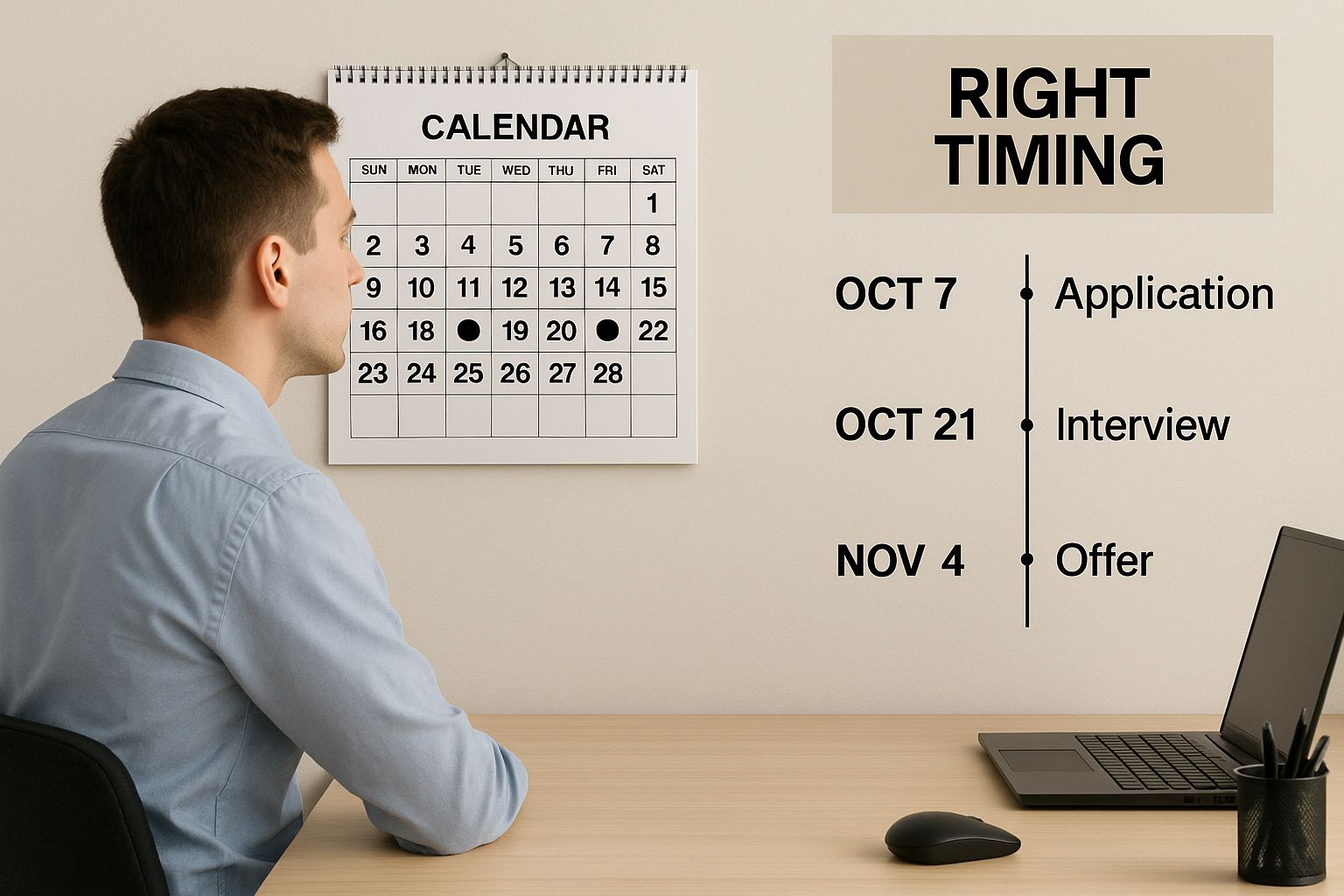
As you can see, the right time to check in changes depending on whether you've just applied, had an interview, or are waiting on a final decision.
Your Guide to Follow-Up Windows
With hiring slowing down in some sectors and job applications climbing by as much as 23%, a well-timed follow-up can make all the difference. It’s your chance to stand out from the crowd.
Before you even think about hitting send, do a little recon. Check the original job posting or the company's careers page for any mention of their hiring timeline. If they’ve given you a specific timeframe, stick to it. If not, it's time to use some general guidelines.
A follow-up isn't just about asking, "Have you decided yet?" It's a strategic move to show you're still keen on the role and to keep your name top of mind for a busy recruiter.
To help you keep track, here's a quick reference table for some common scenarios.
Job Application Follow-Up Timelines
Scenario | When to Follow Up | Key Consideration |
|---|---|---|
After Submitting an Application | 1-2 weeks after the deadline | If no deadline is listed, wait 2 weeks from your submission date. |
After a Phone Screening | 3-5 business days | A brief thank-you note should be sent within 24 hours, but wait longer for a status update. |
After an In-Person/Video Interview | 1 week after the interview | Send a thank-you email within 24 hours. The follow-up is for a progress update. |
After a Final Interview | As per the timeline they gave you | If they didn't provide one, wait 7-10 business days before checking in. |
This table should give you a solid framework for planning your next steps without second-guessing yourself.
When you're juggling multiple applications, it's easy to lose track of who you've contacted and when. A good system is essential. Check out our guide on creating a job application tracking template to stay organized and ensure you never miss an opportunity to connect.
So, Why Haven't You Heard Back Yet?
We’ve all been there. You hit "send" on an application for a job you're genuinely excited about, and then... crickets. It's easy to let your mind wander to worst-case scenarios, but the reality is that the silence often has nothing to do with you or your qualifications.
Think about the sheer numbers for a second. A single corporate job opening can easily attract 250 resumes. That's a huge stack for any hiring manager to sort through, creating an instant backlog from the moment the job is posted.
The Maze of Internal Processes
On top of the mountain of applications, there's a whole world of internal company logistics that can grind the hiring process to a halt. Things like getting the final budget approved, trying to align schedules for interviews, or a key person being on vacation can add weeks to the timeline. It’s rarely a straight line from application to offer.
And let's not forget the digital gatekeeper: the Applicant Tracking System (ATS). Most big companies use these systems to filter resumes for keywords before they ever land in front of a real person. If your resume isn't formatted just right, it might get screened out automatically, no matter how perfect you are for the role.
The key is to remember that the hiring process is often complicated and slow. The silence isn't a rejection; it's usually just a symptom of a backed-up system.
Once you get a handle on these behind-the-scenes realities, you can shift your mindset. Your follow-up isn't about pestering someone for an answer. Instead, it’s a strategic, professional nudge that shows you’re still interested while also respecting their process. This simple change in perspective can help you feel more in control and craft a message that makes you stand out as a thoughtful, proactive candidate.
How to Write a Follow-Up Email That Gets Opened
So, you’ve sent your application out into the void. Now what? The follow-up email is your chance to make a second impression, but only if it actually gets read. A generic or demanding message is a one-way ticket to the trash folder. The trick is to be professional, quick, and add a little something of value.
It all starts with the subject line. Honestly, this is your biggest hurdle. Get it wrong, and nothing else you write even matters.
Nailing the Subject Line
You need a subject line that’s clear and professional, something that cuts through the noise of a packed inbox. It has one job: tell the hiring manager who you are and why you’re emailing them. Instantly.
Here are a few I’ve seen work well:
Following Up: Marketing Manager Application
Checking In: John Smith, Social Media Coordinator Application
Follow-Up on the Project Manager Role
See how they're direct? Including the position title is a small detail that makes a huge difference. It helps them place you immediately without having to dig through their files.
Structuring Your Follow-Up Message
Okay, they opened it. Now the pressure’s on. The body of your email needs to be just as sharp. Remember, hiring managers are swamped, so keep it short and sweet. Your aim is to gently jog their memory, show you're still excited, and subtly connect one of your key skills to the job.
Don’t just ask for an update. Use this as a chance to quickly reinforce why you're the right person. A single, well-placed sentence connecting your experience to a company goal can be incredibly powerful.
Kick things off by politely reminding them who you are and which job you applied for. Then, reiterate your genuine interest in both the role and the company itself.
For example, you might add a line like: "I was particularly excited about the chance to apply my experience with user-centric design to your team's upcoming mobile app launch." This proves you’ve done your research and you're already thinking about how you can contribute.
Once you’ve added that touch of value, you can politely ask about their timeline. Always, always end by thanking them for their time. If you want to go deeper, we've put together a full breakdown with more examples in our guide to the application follow-up email.
The Dos and Don'ts of Following Up
This is a delicate dance. You want to be persistent, not a pest. Here’s a quick cheat sheet to keep your communication professional and effective.
Do | Don't |
|---|---|
Keep it short and sweet. A few brief paragraphs are all you need. | Write a novel. Long emails get skimmed or, worse, ignored. |
Add a touch of value. Briefly mention a relevant skill or your excitement for a specific project. | Come across as demanding. Phrases like "I need an update" are a huge red flag. |
Proofread it twice. Typos and bad grammar make you look careless. | Follow up too much. One or two polite check-ins are plenty. Don't be that person. |
Stick to these simple rules, and your follow-up will be a positive reminder of your candidacy. It shows you're still interested and that you know how to communicate professionally—keeping you top-of-mind for all the right reasons.
Tailoring Your Follow-Up to the Platform
Where you send your application really changes the follow-up game. A direct message on LinkedIn has a completely different feel than a formal email sent to an HR inbox you found on a company website. Each platform has its own unwritten rules, and getting a handle on them is key to timing your follow-up just right.
Think about it: following up on LinkedIn can be a bit more relaxed. It's a professional social network, after all. A short, friendly message to the recruiter or hiring manager often works wonders, especially if you see they're active on the platform. Before you do that, though, make sure your own profile is in top shape. Our guide on how to use LinkedIn for your job search walks you through exactly what to do.
Navigating Job Boards and Company Career Sites
Things get more buttoned-up when you apply through a massive job board like Indeed or a company's own career portal. These systems are built for volume and automation, so your best bet is a classic, well-written email. Sending a cold DM to a random employee on LinkedIn can come across as a little strange in this context, so it's usually better to stick to the official channels.
The platform you use also gives you clues about what kind of response rate to expect, which can help you decide where to focus your energy.
You only have so much time and energy for following up. It makes sense to put more effort into the platforms where you've historically seen better engagement. This leads to more real conversations and less time staring at your inbox.
Response rates can be all over the place. On LinkedIn, for example, the average response rate is about 2.33%. Interestingly, Indeed is a bit higher at 4.7%. Niche, specialized platforms often perform even better—Government Jobs, for instance, boasts a 13.55% response rate. Knowing these numbers helps you be strategic, putting your follow-up efforts where they're most likely to get noticed. You can dig into more of these job search trends and their impact to refine your strategy.
Knowing When to Follow Up Again or Move On

You’ve sent your polite, perfectly timed follow-up, but all you hear back is… crickets. This is that tricky spot where your admirable persistence can quickly cross the line into becoming a nuisance. Figuring out whether to send a second follow-up or just let it go is a real art.
If you do decide to give it one last shot, give them some space. Wait at least another one to two weeks after your first message. When you do reach out, keep it incredibly short and sweet.
You can briefly restate your excitement for the role, maybe mention a new, relevant win (like a project you just completed), and then politely make it clear this will be your final check-in.
Reading the Signs to Move Forward
It’s easy to get tunnel vision when you really want a job, but a long, drawn-out hiring process can be a major red flag. Think about it: research shows that 69% of applicants are likely to turn down an offer if the whole process just takes too long.
Good communication makes for a good candidate experience, and that's a huge factor in whether someone accepts a job. You can dig into more of these kinds of numbers and see how recruiting trends influence the candidate journey on selectsoftwarereviews.com.
Sometimes, no response is the response. Pushing for an answer that clearly isn't coming won't just waste your time; it could hurt your reputation with that company for any future openings.
At the end of the day, knowing when to stop is about valuing your own time and energy. Instead of pouring all your focus into a black hole, pivot back to searching for other great opportunities.
Mentally closing that chapter allows you to go after other promising roles with fresh energy. You don't want to miss out on a company that’s actually ready and excited to move forward with you.
Lingering Questions About Following Up
Even the best-laid plans can get complicated. Let's be honest, figuring out when and how to follow up can feel like walking a tightrope. Here are some answers to those tricky situations that pop up when you're waiting to hear back.
Is Calling Ever a Good Idea?
Stick to email. I know it's tempting to pick up the phone, but in almost every case, email is the way to go. It's professional, non-intrusive, and gives the hiring manager space to respond when they're ready.
An unexpected call can put a busy recruiter on the spot and might come off as a bit pushy. The only time you should even consider calling is if the job description specifically says it's okay, or if a ton of time has passed with no response and you've exhausted all other options.
A thoughtful email respects a hiring manager's packed schedule. A surprise phone call can easily do the opposite. When in doubt, always choose email.
So, How Many Follow-Ups Is Too Many?
My rule of thumb is to follow up no more than twice after you submit your application.
Send your first check-in about one to two weeks after applying. If you hear crickets, it's okay to send one last, very brief message a week or two after that. That's it.
Going beyond two follow-ups can make you seem less like a persistent candidate and more like a pest. Overdoing it can reflect poorly on your professional judgment, not just for this role but for any future opportunities at that company.
But What If the Job Posting Says "No Follow-Ups"?
This one is simple: you have to respect it. If a posting clearly says "no calls" or "no follow-ups," they mean it.
Ignoring a direct instruction right out of the gate is a huge red flag. It tells the employer you can't follow basic directions. This isn't a test—it's usually a sign they're dealing with a massive number of applicants and need to keep their process streamlined. Your best move here is to pour all your energy into making that first application absolutely stellar and then turn your attention to other openings.
Stop guessing and start connecting. Job Compass gives you the tools to find the right contacts, craft the perfect outreach messages, and track your applications—all in one place. Take control of your job search and see the difference at https://jobcompass.ai.

