





Table of Content
Created at
Written by
Founder JobCompass.ai
Oct 8, 2025
Share with:
job recruiter description, recruiter responsibilities, how to hire a recruiter, talent acquisition, recruiter skills
published
A great job description for a recruiter is so much more than a simple list of tasks. It’s your first, best tool for attracting a true talent matchmaker—someone who will build the very teams that drive your business forward.
Think of this person as the essential bridge connecting talented professionals to your company's mission.
Understanding the Modern Recruiter's Role
Before you start writing, you have to know who you’re really looking for. A recruiter doesn’t just fill an empty seat. They are a strategic partner in your company’s growth and one of the most important guardians of your public image.
How well they do their job directly impacts your ability to compete for top talent. A clear, compelling job description is your first move in a much bigger game.
The role has changed a lot, especially as the talent market gets more complex. The global recruiting market is expected to balloon from USD 642.28 billion in 2025 to USD 924.29 billion by 2030, thanks to new tech and the rise of the gig economy. Discover more insights about the recruiting market's growth. This explosive growth highlights just how critical the recruiter's role is in today's competitive world.
In-House Versus Agency Recruiters
While every recruiter connects talent with opportunity, they generally fall into two main camps. Each has a slightly different focus.
In-House Recruiters: These folks work directly for your company. They’re playing the long game, focusing on cultural fit and building talent pipelines that support the organization’s future goals. They are deeply invested in nurturing your company's employer branding.
Agency Recruiters: Working for third-party staffing firms, these recruiters juggle multiple clients. Success for them is often about speed and volume. They become experts at sourcing great candidates quickly across many different industries.
Understanding this distinction is key. An in-house recruiter is a culture builder, while an agency recruiter is a specialized talent hunter. Your job description must reflect the specific type of partner your organization needs to thrive.
Defining Core Recruiter Responsibilities
To really get what a recruiter does, you have to look beyond the job postings. Their role isn't just about collecting resumes; it's about managing the entire, often complex, journey of finding and hiring the right person. Think of them as the ultimate project manager, but for people. They guide both the candidate and the hiring team from that first "hello" all the way to the final job offer.
Their work actually starts way before a job ad goes live. A good recruiter sits down with the hiring manager to build a crystal-clear picture of who they're looking for. This goes deeper than a simple checklist of qualifications. They're trying to understand the essential technical abilities, the crucial soft skills, and the kind of personality that will truly thrive in the team and company culture.
This infographic gives a great high-level view of a recruiter’s world.
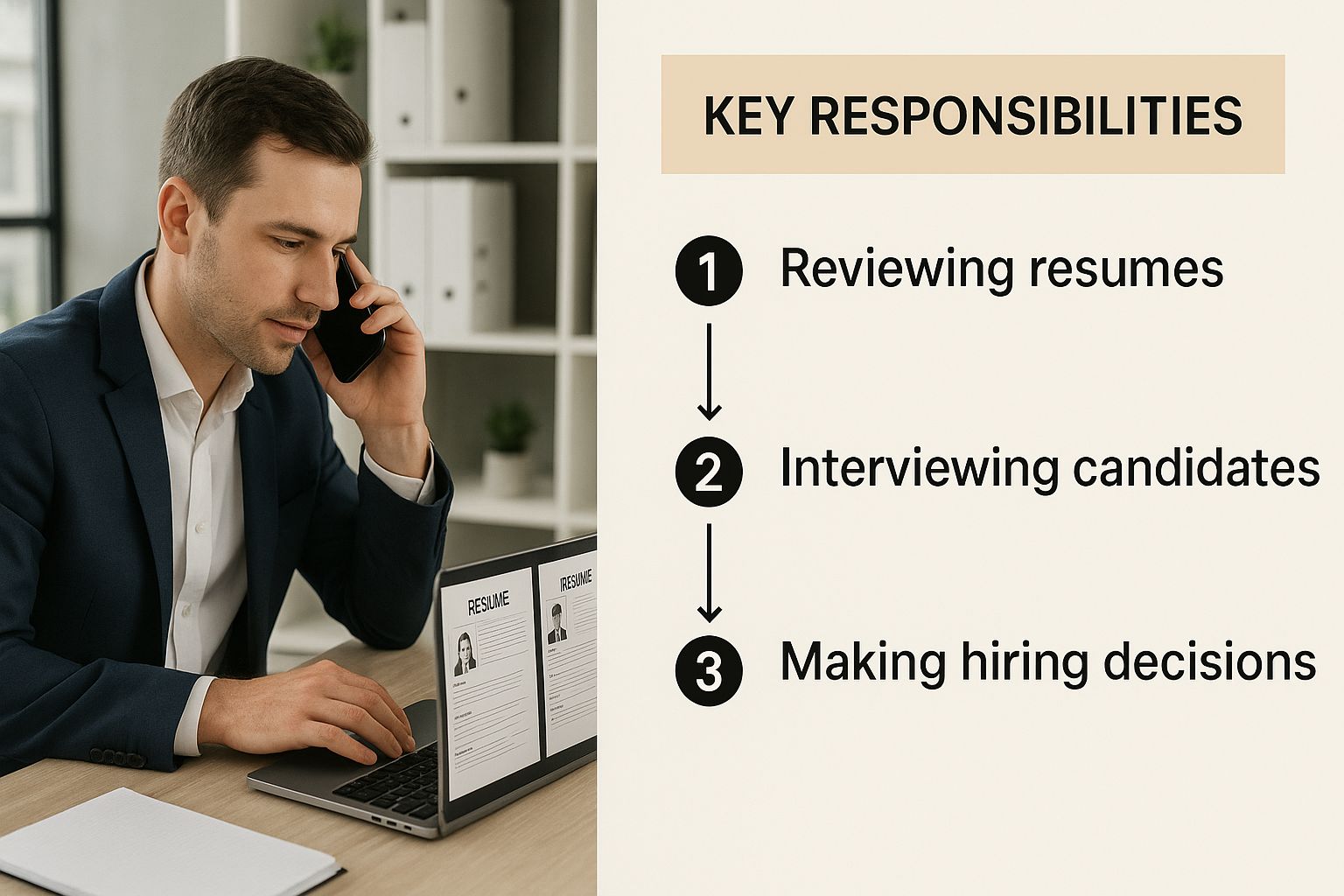
As you can see, it’s a mix of big-picture strategy and getting your hands dirty with the details, from finding talent in the wild to sealing the deal with an offer.
To break it down even further, let's look at how a recruiter's tasks align with the different stages of the hiring process.
Recruiter Responsibilities Across the Hiring Funnel
Hiring Stage | Key Recruiter Responsibilities |
|---|---|
1. Preparation & Strategy | - Partner with hiring managers to define role requirements. |
2. Sourcing & Attraction | - Post jobs on relevant boards and social media. |
3. Screening & Vetting | - Review incoming applications and resumes. |
4. Interview & Selection | - Coordinate and schedule interviews for all stakeholders. |
5. Offer & Closing | - Extend the official job offer. |
6. Onboarding | - Ensure a smooth handoff to HR for the new hire's first day. |
This table shows just how hands-on the role is at every single step. Recruiters are the engine that keeps the entire hiring machine moving forward.
From Sourcing to Screening
With that ideal candidate profile in hand, the real hunt begins. Recruiters essentially become talent detectives. They are constantly sourcing candidates from a whole host of places—not just job boards, but professional networks, industry events, and platforms like LinkedIn. This proactive work is what uncovers great people who aren't even actively looking for a new job yet.
Then comes the screening. They sift through applications to find the gems that truly match what the team needs. This is followed by the first real human conversation, usually a screening call where the recruiter gets a feel for the candidate's skills, interest level, and whether they'll be a good fit for the company's vibe.
Coordinating and Closing
Once they’ve found a few strong contenders, the recruiter switches gears into a master coordinator. Their daily to-do list is often packed with tasks like:
Scheduling interviews between candidates and the (often very busy) hiring team.
Prepping candidates with helpful info about the company and who they'll be talking to.
Gathering feedback from everyone on the interview panel to keep the process moving.
Finally, they step in to close the deal. Making a job offer is so much more than just throwing out a salary number. Recruiters are skilled negotiators, working to find that sweet spot where both the company and the candidate feel great about the final package.
A recruiter's ultimate goal is to ensure a seamless and positive candidate experience. From the first message to the final handshake, they are the face of the company, building relationships that can last for years. This commitment is what separates a good recruiter from a great one.
The Essential Skills of a Great Recruiter

A list of responsibilities only tells you half the story. The best recruiters bring a unique mix of people smarts and technical skills to the table, allowing them to not just fill roles, but to build incredible teams.
Think of it this way: the tasks are what they do, but the skills are how they get amazing results. It's these abilities that separate a resume-pusher from a genuine talent partner.
The Human Element: Soft Skills
At its heart, recruiting is a people business. A great recruiter has to be skilled at making real connections and navigating the often-tricky world of human interaction.
Persuasive Communication: They don't just describe a job; they sell the opportunity. This means painting a clear picture of the company's vision and showing a candidate why this role is the perfect next move for their career.
Empathy and Relationship Building: The best recruiters listen more than they talk. They work to understand a candidate's ambitions, anxieties, and career goals, building trust that goes far beyond a single placement.
Resilience and Tenacity: The road to a successful hire is almost never a straight line. Great recruiters take rejection in stride, handle unexpected hiccups, and stay driven to find the right person, no matter what.
Today’s hiring world is moving toward skill-based hiring. In fact, research shows that focusing on skills is five times more predictive of job performance than just looking at someone's formal education. Explore more recruitment trends and data.
The Technical Toolkit: Hard Skills
Beyond people skills, recruiters need the right technical know-how to work efficiently and find talent that others miss. In today's market, being comfortable with certain tools and techniques isn't optional.
Here are the key hard skills to look for:
Applicant Tracking System (ATS) Mastery: Recruiters practically live inside their ATS. They need to be pros at managing candidate pipelines, tracking every stage, and keeping all the data clean and organized.
Advanced Sourcing Techniques: This is about more than just posting a job ad. It means using things like Boolean search strings on platforms like LinkedIn to find hidden talent and connect with people who aren't actively looking.
Data Analysis: Being able to read the numbers—like time-to-fill, cost-per-hire, and which sources bring the best candidates—is critical. It helps them make smarter hiring decisions and continuously improve their process.
Job Recruiter Description Templates You Can Use

Sometimes the best way to learn is by doing. So, to help you get started right away, we’ve put together two recruiter job description templates you can easily customize.
Think of these as more than just a list of duties. They’re a starting point for telling the story of the role and your company. Feel free to adapt them to match your unique culture and attract the kind of recruiting partner you’re truly looking for.
Corporate Recruiter Template
This template is perfect for an in-house recruiter who will be at the heart of building your teams and shaping your company culture.
Job Summary
We're on the hunt for a motivated Corporate Recruiter to join our People team and own the entire recruiting process from start to finish. In this role, you’ll be a strategic partner to our hiring managers, a brand ambassador to candidates, and a key player in our company's growth. Your work will directly shape our ability to bring in and keep the best people in the industry.
Core Responsibilities
Work closely with department heads to understand their hiring needs and map out smart sourcing strategies.
Manage the full recruitment cycle, from finding great candidates to negotiating the final offer.
Build and nurture a pipeline of qualified talent for roles we have now and roles we’ll need in the future.
Conduct initial screening calls and interviews to assess a candidate’s skills and see if they’re a good fit for our culture.
Make sure every single candidate has a positive and memorable experience, no matter the outcome.
Skills and Qualifications
2+ years of full-cycle recruiting experience, ideally within a corporate, in-house environment.
A proven track record of finding and engaging passive candidates using a variety of tools.
Excellent communication skills and a natural ability to build strong, genuine relationships.
Hands-on experience with an Applicant Tracking System (ATS).
Pro Tip: Don't forget to inject your company's personality into the description. If your culture is laid-back and collaborative, your language should be too. This simple tweak helps candidates decide if they’ll vibe with your team before they even hit “apply.”
Technical Recruiter Template
This template is geared toward the specialized skill of finding candidates with specific and often complex technical abilities.
Job Summary
[Your Company Name] is looking for a specialized Technical Recruiter to find the brilliant engineers and developers who will build the future of our products. You'll be in charge of sourcing, screening, and hiring top-tier talent in engineering, product, and data. This isn’t your average recruiting gig—it requires a real understanding of the tech world and the know-how to connect with highly sought-after candidates.
To learn more about getting your job posts just right, check out our guide on effective job description analysis.
Core Responsibilities
Use creative sourcing strategies to uncover top technical talent on platforms like LinkedIn, GitHub, and Stack Overflow.
Conduct detailed technical screenings to accurately evaluate a candidate's skills and experience.
Build strong, collaborative partnerships with engineering leaders to truly understand their complex hiring needs.
Run a smooth and transparent interview process, keeping both candidates and hiring teams in the loop.
Skills and Qualifications
3+ years of technical recruiting experience, preferably in a fast-paced setting.
A history of successfully hiring for roles like Software Engineer, Data Scientist, or Product Manager.
A solid grasp of technical lingo, including programming languages and frameworks.
Familiarity with Boolean search and other advanced sourcing techniques.
Modern Challenges in Talent Acquisition
Let's be honest: the recruiter's job has gotten incredibly tough. To write a job recruiter description that actually attracts top talent, you first need to grasp the daily battles they're fighting. This isn't just about posting an ad and sifting through resumes anymore; it's a strategic fight for the best people.
We're in a fiercely candidate-driven market. The best professionals often have several offers on the table, which means recruiters have to wear multiple hats—they're part marketer, part negotiator, and part career coach. There's constant pressure to fill today's open roles while simultaneously building a pipeline of talent for tomorrow.
The Pressure to Perform and Retain
This high-stakes game creates some serious internal challenges. Juggling hiring quotas with the need to give every candidate a great experience is a recipe for burnout, and it's happening all over the industry.
Recruiters are finding it harder than ever to connect with candidates, and companies are struggling to keep their own talent acquisition teams intact. In fact, new data shows that 51% of organizations believe turnover on their own recruitment team will be their biggest hurdle in the near future. You can dig deeper into these recruitment challenges for 2025.
This reality hammers home a critical point: a positive, transparent candidate experience isn't just a "nice-to-have." It’s the baseline for attracting great candidates and great recruiters.
When you acknowledge these hurdles in your own hiring process, it shows potential recruiters that you get it. A thoughtfully written job description can signal that you've built a supportive environment where they can actually succeed. Mentioning how your team uses modern tools to find keywords in a job description is a great way to show you're invested in making their job more effective, not just more stressful.
Got Questions? We've Got Answers
To wrap things up, let's clear up some of the most common questions people have about the world of recruiting. Whether you're looking to hire one or become one, these points should help.
Recruiter vs. Sourcer: What's the Real Difference?
It’s easy to get these two mixed up, but their roles are quite distinct. Think of a sourcer as a talent detective. Their entire job is to hunt for potential candidates, especially the passive ones who aren't even looking for a new gig. They build the initial list of interesting people.
A recruiter then takes that list and runs with it. They own the relationship from that point on—screening candidates, coordinating interviews, navigating the offer stage, and closing the deal. The sourcer finds the talent; the recruiter gets them hired.
How Do Recruiters Get Paid?
This really depends on where they work. The compensation models are pretty different.
In-house recruiters are on the company's payroll, just like any other employee. They get a regular salary, often sweetened with bonuses tied to hitting hiring targets or overall company performance.
Agency recruiters, on the other hand, typically work on commission. They earn their keep by taking a percentage of the first-year salary for each candidate they successfully place at a client's company.
What Does a Career Path in Recruiting Look Like?
A recruiting career isn't a one-way street; there are plenty of avenues for growth. You might start as a recruiter and work your way up to a Senior Recruiter, and then eventually lead a whole team as a Recruiting Manager or Director of Talent Acquisition.
But that's not the only path. Many recruiters find their passion in a specific niche, becoming experts in tricky areas like technical recruiting or executive search. Others use their people-first skills to move into broader HR roles, like an HR Business Partner, where they can have a wider impact on the organization.
An effective job recruiter description does more than just list tasks. It tells a story. It should be clear and compelling, outlining the real responsibilities while also painting a picture of your company culture to attract the kind of talent you actually want to hire.
Ready to stop blindly applying and start strategically connecting with the people who can hire you? Job Compass transforms your job search by revealing the hiring managers and recruiters behind every job post, crafting personalized outreach messages, and optimizing your CV for every application. Double your interview rate and get started for free at Job Compass

