





Table of Content
Created at
Written by
Founder JobCompass.ai
Oct 5, 2025
Share with:
how to research companies, company research, interview preparation, job search tips, due diligence
published
Ever jumped into a job search and just started firing off applications left and right? It feels a bit like throwing darts in the dark. Taking the time to really research a company isn't just another chore to add to your list—it's your secret weapon.
This is how you find a place where you'll actually be happy, not just tolerated. It's how you spot the warning signs and, when the time comes, negotiate with confidence.
Why Doing Your Homework Gives You a Real Advantage
Spending even a few hours digging into a company's health, its culture, and where it stands in the market can save you from a world of hurt later. We've all heard stories (or lived them) about taking a job that looked great on paper, only to find out it was a terrible fit.
This is about getting past the shiny "About Us" page. It’s about building a real, 360-degree view of where you might spend 40+ hours of your life every week.
Think of it like this: The company is interviewing you, but you're also interviewing them. Solid research flips the script. You stop being just another applicant hoping for a chance and become an informed professional who knows exactly what you bring to the table and what you expect in return.
A candidate who has done their research doesn't just have better answers—they ask better questions. That alone shows you're genuinely interested and can think critically, which immediately sets you apart from everyone else who just skimmed the homepage.
It's More Than Just Fact-Finding
The goal here isn't to just collect a list of facts. It's about connecting the dots. Don't just read the company's mission statement; find out if their employee reviews, recent news, and public actions actually back it up.
When you dig a little deeper, you start to see the full picture.
Find Your Fit: You get a feel for the real day-to-day vibe, not the polished version they sell on their careers page.
Spot the Red Flags: You can uncover early warnings of trouble, like high employee turnover, financial issues, or a string of bad leadership reviews.
Negotiate Like a Pro: When you know how the company is performing and what the industry standards are, you're in a much better position to argue for the salary you deserve.
This kind of deep-dive analysis is a big deal. The whole market research industry, which is built on this exact type of business intelligence, is expected to be worth around $150 billion by 2025. It just goes to show how much value there is in making decisions with good data. Discover more insights about market research industry trends.
Building Your Initial Company Dossier
Your first real move in researching any potential employer is to see the story they tell about themselves. You’re essentially gathering the baseline intelligence straight from the source—their own digital turf. The best place to begin is almost always the company's website.
Head straight for the 'About Us' and 'Careers' pages. I know, it sounds obvious, but you'd be surprised what you can glean from them. Sure, it’s marketing speak, but it's their marketing speak. Pay close attention to the words they use over and over. Is it all about “disruption” and “innovation,” or do they lean heavily on “customer-centric” or “sustainability”? These keywords are gold because they tell you what the company values, giving you the exact language to echo in your resume and interviews.
Once you’ve got a feel for their official story, pivot over to where the real-time action is: professional networks. LinkedIn is non-negotiable here. A company's LinkedIn page is like a living, breathing version of its static website, constantly updated with announcements, new hires, and project highlights. It’s where you get a sense of their current pulse.
Take a look at a major player like Google, for example. Their page is a constant stream of corporate news, job postings, and employee stories.
Scrolling through their feed tells you more than just what jobs are open; it shows you what they're proud of right now and where their focus is headed.
Reading Between the Lines
With the company's polished story in hand, it's time to dig a little deeper, especially for publicly traded companies. This is where you find the stuff they have to tell investors, which is often far more revealing. Don't let the term 'Investor Relations' scare you off; you're not trying to become a financial analyst overnight. You’re just looking for the big picture.
Annual Reports: Find the CEO's letter, which is usually right at the beginning. It's a fantastic, plain-English summary of their biggest wins and toughest challenges from the past year.
Press Releases: What have they been announcing lately? New partnerships, big product launches, or major acquisitions are all huge clues about their direction and growth areas.
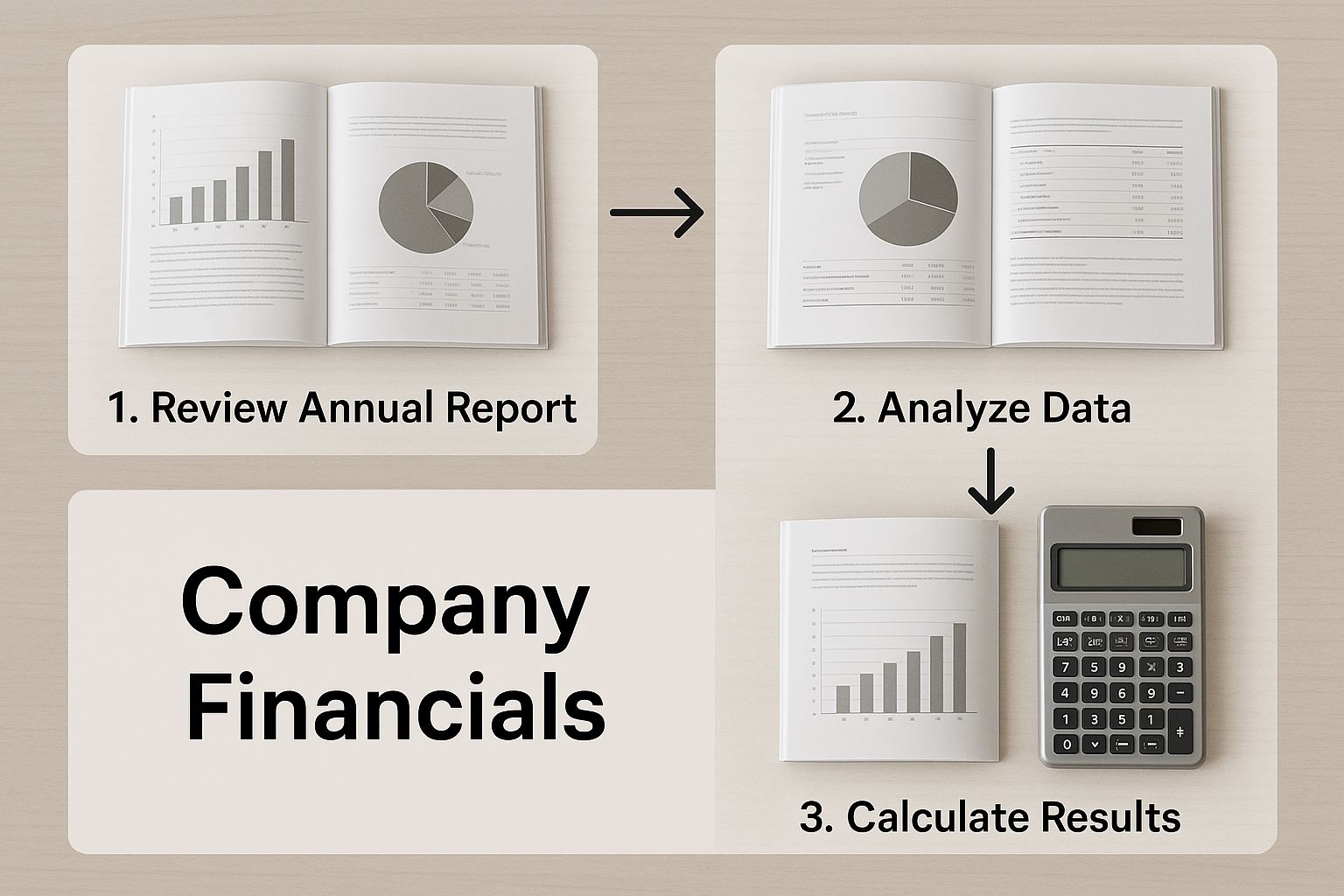
Financial Health: Honestly, learning the basics of how a company is performing financially is a smart move. The same skills investors use to find undervalued stocks can help you spot a stable, growing employer versus one that might be struggling.
This kind of intel helps you understand if the company is on solid ground or facing turbulence you might want to avoid.
Putting It All Together
Now, you start connecting the dots. Does the spike in engineering hires you saw on LinkedIn match up with the new product launch they announced in a press release? They talk a big game about work-life balance on their careers page, but do the actual job descriptions mention flexible hours or remote options? This is where the real insights happen.
Building this initial dossier isn't just about acing the interview. It's about deciding if this company is even worth your time and energy. It helps you zero in on employers that genuinely fit what you're looking for.
As you piece this puzzle together, you'll naturally start to identify key people at the company. Looking at the career trajectories of department heads or team leads on LinkedIn can tell you a lot about what the company values and whether they promote from within. If you want to take that a step further, our guide on how to find the hiring manager can show you how to turn that information into a direct connection.
By blending their public story with network intelligence, you create a much clearer, more nuanced picture of where you might be working.
Getting a Read on a Company's Financial Health

You don’t have to be a Wall Street analyst to figure out if a company is on solid ground. But taking a peek at their financials is one of the smartest things you can do in your job search.
Why? Because a company's financial stability directly impacts you. It affects everything from job security and promotion opportunities to the budget your team gets for new projects. A healthy, growing company invests in its people. A struggling one might be quietly planning for layoffs.
If you’re looking at a publicly traded company, you’re in luck. They’re legally required to open their books, which means a ton of information is available through quarterly (10-Q) and annual (10-K) reports. Don't let the jargon intimidate you. You're not performing an audit, just looking for basic trends.
Is revenue climbing year after year? Are they turning a profit, and is that profit growing? These are the big questions. A consistent track record of growth is a huge green flag, signaling a stable business with a solid place in the market. That’s the kind of place you want to work.
Where to Dig for Financial Clues
When you start digging into the numbers, it helps to know exactly where to look. A company’s investor relations website is the obvious starting point, but the real story often emerges when you cross-reference that with what financial news outlets and analysts are saying.
To get a clearer picture, I always check a few key sources:
Public Filings (SEC EDGAR database): The goldmine here is the "Management's Discussion and Analysis" (MD&A) section. It’s where executives explain the numbers in plain English, giving you context you won't find on a balance sheet.
Quarterly Earnings Calls: After a company releases its earnings, they host a call with analysts. You can almost always find a transcript or recording. The real magic is in the Q&A—listening to the tough questions analysts ask can expose underlying problems or hidden opportunities.
Industry News and Reports: Keep an eye on publications like The Wall Street Journal, Bloomberg, or niche trade journals. They’ll cover major financial news, big partnerships, or market shifts that directly impact the company you’re researching.
Remember, a single bad quarter doesn't necessarily spell doom. What you're looking for are consistent trends over time. A company that has shown steady revenue growth for three years is a much safer bet than one with erratic, unpredictable earnings.
Looking Beyond Public Companies
Things get trickier with private companies and startups, since they aren’t required to publish their financial data. You have to put on your detective hat and piece together clues from different places.
Instead of looking for profit margins, you’re looking for signs of momentum and investor confidence. Here's what I focus on:
Funding Announcements: Check out sites like Crunchbase or TechCrunch to see their funding history. A recent, large funding round (Series B or later) is a fantastic sign that smart money believes in their future.
Hiring Sprees: Is the company’s career page suddenly flooded with new roles, especially in sales and engineering? That's a classic sign they’ve got fresh capital and are gearing up to expand.
Major Partnerships: When a startup announces a partnership with a big, established company, it’s a huge vote of confidence. It shows they have a product or service that the market values.
Thinking about the big picture, entire industries are built on this kind of intelligence. Just look at a company like Gartner, which brought in $5.48 billion in 2022 by providing deep business insights to other companies. This just shows how valuable it is to understand a company's financial position.
To get more comfortable with the terminology, spending a little time understanding earnings reports can make a huge difference in your research.
To help you stay organized, here's a quick cheat sheet for where to find the information you need.
Key Information Sources for Company Research
Information Type | Primary Source | What to Look For |
|---|---|---|
Financial Performance | SEC Filings (10-K, 10-Q), Investor Relations Website | Revenue/profit trends, Management's Discussion & Analysis (MD&A) |
Growth & Stability | Funding Announcements (Crunchbase), Press Releases | Recent funding rounds (Series B+), aggressive hiring, major partnerships |
Executive Commentary | Quarterly Earnings Call Transcripts | Tone of leadership, analyst questions, guidance for future quarters |
Market Position | Industry News (Bloomberg, WSJ), Analyst Reports | Market share changes, competitive threats, new product launches |
Red Flags | Financial News, Glassdoor Reviews | Executive turnover, ongoing lawsuits, consistent negative sentiment |
This table can act as your roadmap, ensuring you're looking in the right places for the right clues to build a complete picture of a potential employer.
Gauging the Real Company Culture
A great title and a fat paycheck won't mean much if you're dreading Monday mornings. That's why figuring out a company's actual culture is non-negotiable. You have to look past the shiny mission statement and the ping-pong table they show off on the careers page.
What you're really after is a feel for the day-to-day reality. This means shifting your focus from what the company says about itself to what its people—both current and former—are saying.
Reading Between the Lines of Employee Reviews
Your first stop for this kind of detective work should be platforms like Glassdoor. But don't just glance at the overall star rating. That number alone can hide a lot.
The real gold is in the individual reviews. You need to look for patterns.
A single bad review about a manager could just be a one-off personality clash. But if you see comment after comment over a two-year span complaining about burnout, poor communication, or a total lack of work-life balance? That’s not a disgruntled employee; that’s a culture problem.
Keep an eye out for comments on these three areas:
Management Style: Are managers seen as supportive mentors, or are there consistent complaints about micromanagement and a culture of mistrust?
Work-Life Balance: Do people talk about flexible schedules and feeling respected, or is the recurring theme about working late and being tethered to their email?
Growth Opportunities: Do you see mentions of promotions, mentorship, or learning new skills? If not, you might be looking at a dead-end job.
Here's a pro tip: Be a little suspicious of a perfect 5-star rating, especially if there are hundreds of reviews. The best companies still have challenges, and a mix of positive and constructive feedback is often a sign of a more authentic, healthy environment. A perfect score can sometimes mean the company is heavily encouraging or curating reviews.
If you want a more systematic way to analyze what you're finding, there are some great resources out there. Our guide on company culture assessment tools can give you a solid framework for turning all those subjective comments into real, usable insights.
Connecting with People for the Inside Scoop
Anonymous reviews are one thing, but a real conversation is a game-changer. This is where LinkedIn becomes your best friend. The goal isn't to ask for a job; it's to have a few quick, informal chats to get a genuine feel for the place.
Start by searching for people who currently work there or used to, ideally in a role similar to yours. When you reach out, skip the generic connection request. A short, personalized message that shows you respect their time goes a long way.
Here’s a simple script you can adapt:
“Hi [Name], I’m exploring opportunities in the [Your Industry] space and [Company Name] is on my radar. I was really impressed with [mention a specific project or achievement]. Since you have experience on the [Department Name] team, I was hoping you might be open to a quick 15-minute chat next week to hear about your experience there. I’d really value your perspective.”
This approach shows you’ve done your homework and aren't just spamming for a referral.
Asking the Right Questions
Once you have someone on a call (or video), have a few thoughtful questions ready. You're not interrogating them; you’re just trying to understand their experience.
Try asking things like:
"What was daily collaboration like on your team?"
"How open is the leadership to new ideas or feedback from employees?"
"What's one thing you wish someone had told you about the culture before you joined?"
The answers—and just as importantly, the way they answer—will give you the most authentic preview of the company culture you’ll ever get. This is the kind of homework that separates a good job search from a great one, and it’s how you land in a role where you can actually thrive.
Use Modern Tech to Dig Deeper
Okay, let's talk about getting a real edge. Instead of just manually clicking through websites for hours, you can use a few smart tools to automate your research and find the details that most other candidates will miss.
This isn't about being lazy; it's about being strategic. You want to spend less time gathering raw information and more time figuring out what it all means.

One of the simplest, yet most powerful, things you can do right now is set up a Google Alert for any company on your shortlist.
Once it's set, you’ll get an email anytime that company hits the news. This could be anything from a major product launch to a sudden C-suite departure or even some negative press. It’s all critical intel, and it comes right to your inbox.
Putting AI to Work for You
The real game-changer here is artificial intelligence. AI's role in business intelligence is exploding—in 2024 alone, 78% of organizations reported using AI, a huge jump from just 55% the year before, according to research from Qualtrics. This just shows how vital these tools have become for making sense of complex information.
You can use that same power for your job search. Think about it: instead of slogging through an 80-page quarterly earnings report, you could have an AI tool give you the highlights in about 30 seconds.
This is a lifesaver for tasks like:
Summarizing Earnings Calls: Find the transcript, paste it into an AI chat tool, and ask, "What were the top three takeaways?" or "What concerns did the analysts raise?"
Breaking Down Financials: Ask it to spot key trends from a financial statement, like changes in revenue growth or debt levels.
Translating Jargon: If you run into technical terms you don’t recognize, an AI can explain them in simple language instantly.
Automating the grunt work is a huge benefit of a modern, AI-powered job search. It frees you up to think about the big picture.
Think of these tools as your personal research assistant. They do the tedious stuff, which lets you focus on connecting the dots and really understanding where a company is heading.
Check the Vibe on Social Media
Official press releases and company websites are designed to paint a rosy picture. They only tell you the story the company wants you to hear. For the real, unfiltered story, you need to see what actual people are saying.
This is where social media comes in. Head over to platforms like X (formerly Twitter) and LinkedIn and search for the company’s name and any official hashtags.
Pay close attention to the tone of the conversation. Are customers raving about a new feature, or are they flooding the company's mentions with complaints about bad service? Do employees seem genuinely excited to share their work, or can you spot hints of frustration in their posts? This is the kind of raw feedback that gives you a much more authentic feel for a company's culture and reputation than any "About Us" page ever will.
Answering Your Lingering Questions
Even with the best game plan, you're bound to run into a few tricky spots while digging into a company. It’s one thing to have a checklist, but it’s another to know how to handle the curveballs. Let's walk through some of the most common questions that come up.
How Much Research Is Really Enough?
There isn’t a magic number, but I’ve found that a solid two to three hours of focused research per company is the sweet spot for roles you’re genuinely excited about. This isn't about memorizing every page of their website. It's about getting comfortable enough with their story to speak about it with confidence.
You want to move beyond the talking points you could find in a quick two-minute search. The goal is to grasp their position in the market, understand their recent wins and struggles, and get a feel for their culture. If you can’t do that, you risk sounding like you just glanced at their "About Us" page moments before the call.
A word of caution: it's also possible to over-research. You don't need to recite line items from their last five annual reports. Keep your focus on the bigger picture—the company's overall health, its culture, and how this specific role fits into its goals. Be informed, not an encyclopedia.
What If I'm Researching a Stealthy Startup?
So, what do you do when you're looking at a small startup with no Glassdoor footprint and barely any press? This is a classic scenario, but it's also a fantastic chance to show off your investigative skills. When the public record is thin, you just have to shift your strategy to the people and the product itself.
Here's how I'd tackle it:
Dig into the Founders: Head straight to LinkedIn and look up the founders. What’s their background? Have they built successful companies before? Where there are proven leaders, investor confidence often isn't far behind.
Follow the Money: Check out a platform like Crunchbase to see who their investors are. If you see reputable VC firms on the list, that’s a huge vote of confidence—they’ve done their own deep dive before writing a check.
Get Hands-On with the Product: If you can, sign up for a trial or test out their service. Nothing beats firsthand experience. It gives you incredibly specific and insightful things to talk about that no one else will mention.
How Do I Weave My Research into the Interview?
Bringing up what you’ve learned during an interview is an art form. You want to come across as genuinely interested, not like you're trying to prove how much you know. The secret is to turn your findings into thoughtful questions.
Instead of just stating a fact like, "I saw you launched Project X last quarter," try this instead:
"I was reading about the launch of Project X, and it seems like a really interesting move into the enterprise space. I'd love to hear more about how that initiative has shaped the day-to-day priorities for this team."
This little pivot accomplishes two crucial things at once. It proves you did your homework, and it opens up a real conversation about the role you’re interviewing for. It shows genuine curiosity, which is always more impressive than just listing off facts you found online. Knowing how to research companies is a great skill, but knowing how to use that knowledge is what will really set you apart.
Ready to turn all that research into actual conversations? Job Compass is built to help you connect with the right people inside the companies you’re targeting. Our platform helps you find recruiters, hiring managers, and even future teammates, plus it offers AI-powered tools to get your resume and LinkedIn profile in top shape. Stop sending applications into a black hole and start building connections that lead to interviews. Find your next role faster at https://jobcompass.ai.

