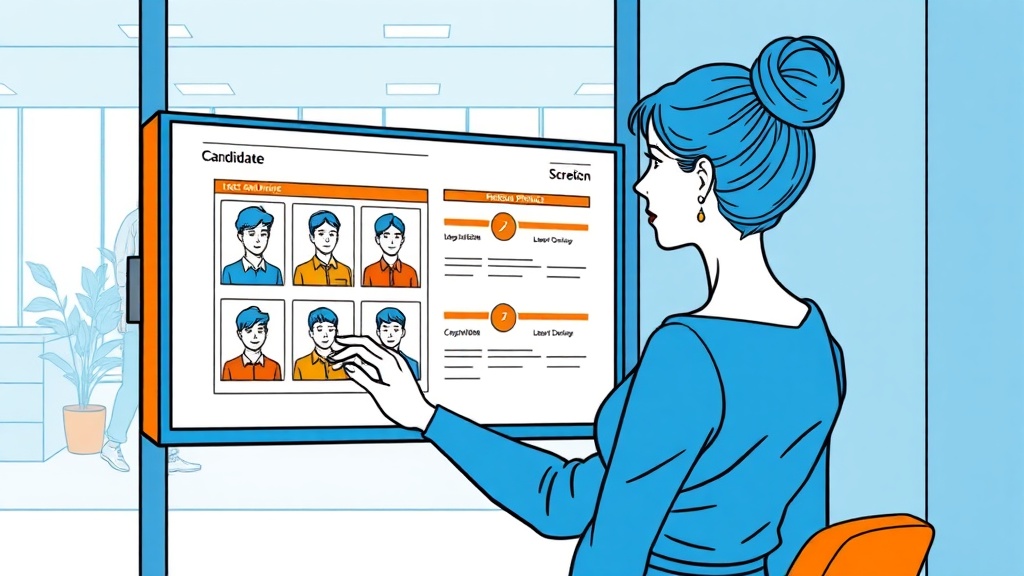
Your Essential Fintech Recruiting Playbook for 2026

Your Essential Fintech Recruiting Playbook for 2026

Your Essential Fintech Recruiting Playbook for 2026

Your Essential Fintech Recruiting Playbook for 2026

Written by

Dmytro Lokshyn

Dmytro Lokshyn

Founder JobCompass.ai

Mar 2, 2026

0 Minutes Read
0 Minutes Read

Share with:

fintech recruiting, fintech hiring, technical recruiting, hiring in fintech

published

You're reading

Your Essential Fintech Recruiting Playbook for 2026

Table of Content

The days of fintech recruiting being a simple numbers game are over. It's no longer about just growing your headcount as fast as you can. The new playbook is all about making precise, strategic hires. We're talking about finding that one product-minded engineer or a seasoned risk expert who can change the game, not just hiring five generalists to fill seats.

The New Rules of Fintech Recruiting

Four diverse colleagues collaborate on a laptop in a modern office with a 'Quality over Quantity' sign.

Welcome to the new era of fintech hiring. The wild, explosive growth we saw in the early 2020s has settled down. Now, we're in a much more measured—and frankly, more demanding—market. If you want to win in 2026, you need a specialized, efficient, and targeted strategy that prizes deep expertise over sheer numbers.

The market has definitely shifted. In the first half of 2025, global fintech funding leveled out at around $44.7 billion across 2,216 deals. This caused investors to pump the brakes and demand smarter talent strategies. The old model of "hire fast, break things" is gone.

This shift means every single hire has to count. The real challenge now is attracting talent that not only has sharp technical skills but also a deep understanding of the industry—things like payments, risk, and compliance.

Shifting Priorities in a Maturing Market

Competition for true specialists has become fierce. Companies aren't just looking for a "software engineer" anymore. They need an engineer who gets financial regulations or a data scientist who can model credit risk with pinpoint accuracy. This demands a far more nuanced recruiting approach.

Building a strong team in this environment comes down to a few core principles:

  • Precision Over Volume: Focus on making one exceptional hire instead of five average ones. This all starts with defining the role with extreme clarity before you even think about posting a job description.

  • Domain Expertise is Non-Negotiable: Candidates have to bring a real understanding of the financial world they'll be working in. It’s not something they can just pick up on the job.

  • Strategic Employer Branding: You need to sell your company's mission and the interesting technical challenges you're solving to attract top talent, especially those who aren't actively looking. Learning https://jobcompass.ai/blog/what-is-employer-branding is a great place to start.

The best fintech recruiting teams I see today operate more like strategic advisors. They’re embedded with the product teams, understand the roadmap, and are already building pipelines for skills they'll need six months from now.

Key Roles and Skills to Target

To get this right, you have to know exactly what the talent market looks like. The people you bring on board will directly define your ability to build innovative products inside a heavily regulated space. This takes a deliberate, organized approach. For companies trying to move quickly, using a specialized tool like the Hubdrive Recruitment Module can make a world of difference in keeping things streamlined.

To give you a better idea of who to look for, I've put together a table outlining the most in-demand fintech roles and the skills that separate the great candidates from the good ones.

In-Demand Fintech Roles and Skills for 2026

Role

Core Responsibilities

Essential Skills

Payments Engineer

Building and maintaining payment gateways, processing systems, and API integrations.

Deep knowledge of payment rails (ACH, FedNow, card networks), PCI-DSS compliance, and high-availability systems.

Product Manager, Lending

Defining the product strategy for credit products, from underwriting to loan servicing.

Experience with credit risk modeling, regulatory requirements (e.g., TILA, ECOA), and user-centric design for financial products.

Data Scientist, Risk

Developing models to detect fraud, assess creditworthiness, and manage portfolio risk.

Expertise in machine learning, predictive analytics, SQL, Python/R, and experience with large-scale financial datasets.

Compliance Officer

Ensuring the company adheres to all financial regulations, including AML, KYC, and data privacy laws.

Certifications like CAMS, deep understanding of the BSA/AML framework, and experience interacting with regulators.

Head of GTM Strategy

Leading the commercial launch of new fintech products, including pricing, positioning, and sales enablement.

Proven track record in B2B or B2C fintech marketing/sales, strong analytical skills, and experience with product-led growth.

Use this as a starting point. It’ll help you align your hiring goals with what the market can actually offer, ensuring you're targeting the right people with the right skills from day one.

How to Define and Find Your Ideal Fintech Candidate

A person uses a laptop displaying 'TARGETED SOURCING', candidate profiles, and charts.

A great hire starts long before you ever post a job description. It begins with getting crystal clear on who you’re actually looking for. If your hiring team isn't aligned on the specifics, you'll end up with a generic wish list, a flood of unqualified applicants, and a lot of wasted time in interviews.

Hiring in fintech requires a level of precision you don't see in other industries. You aren't just filling a seat; you're finding someone with a rare mix of technical chops and deep financial domain knowledge. That means you have to think beyond broad job titles and really nail down the exact expertise needed to tackle your company's biggest challenges.

For instance, don’t just look for a "Senior Backend Engineer." Get specific. Your ideal candidate might be a "Senior Backend Engineer with 3+ years of experience building real-time settlement systems and a working knowledge of ISO 20022 messaging." That kind of detail acts as a powerful filter right from the start.

Articulating the Role Beyond the Job Description

The single most important meeting in the entire hiring process is the initial intake. Get your engineering, product, and business leaders in a room together and hash out what this role really needs to accomplish. Your goal is to create a scorecard that clearly separates the "must-haves" from the "nice-to-haves."

This scorecard should break down:

  • Core Technical Skills: Be specific about the programming languages, frameworks, cloud platforms, and architectural patterns that are non-negotiable.

  • Essential Domain Knowledge: Do they need to understand PCI-DSS? KYC/AML regulations? The mechanics of BNPL products? The intricacies of payment rails like FedNow or SWIFT?

  • Key Soft Skills: What kind of person will succeed here? Someone who thrives in ambiguity? An expert at managing stakeholder expectations?

  • "Spike" Areas: What’s the one superpower this person absolutely must have? It could be anything from scaling a high-throughput system to navigating a complex regulatory audit.

A well-defined role scorecard is your north star. It ensures every interviewer is assessing candidates against the same objective criteria, which helps strip out bias and dramatically improves the quality of feedback you get.

Once you have a sharp picture of who you need, the real work begins: finding them. Exploring effective strategies for finding candidates is crucial, because the old "post and pray" method of just listing a job on big boards simply doesn't cut it anymore in such a competitive market.

Modern Sourcing Channels for Fintech Talent

The truth is, the best fintech talent is rarely looking for a job. They’re usually excelling in their current role but are open to a truly compelling opportunity if one comes along. To reach them, you need to go where they are.

Forget casting a wide net. The key is targeted, personalized outreach that shows you’ve done your homework and understand why they are a specific fit for your team.

Here are the channels that consistently deliver the best results in fintech recruiting:

  • Employee Referrals: This is, and always has been, the number one source for high-quality hires. Your team knows your culture and technical standards better than anyone. Set up a referral program with a bonus that actually motivates them, and constantly encourage your people to tap into their personal networks.

  • Niche Online Communities: Go where the experts hang out. This means joining specialized Slack channels (like FinTechs For FinTechs), hopping into Discord servers focused on Web3, or participating in subreddits like r/fintech. The trick is to add value first—don't just spam job links. Join the conversation and build relationships.

  • Targeted LinkedIn Outreach: Ditch the generic templates. A personalized message that references a specific project on their profile, a blog post they wrote, or their comment in a shared group will get you a much better response rate. A message like, "I saw your work on scaling the transaction ledger at Company X and was seriously impressed..." is infinitely more effective than a generic pitch.

Engaging passive talent is about starting a conversation, not just filling a vacancy. Your first message should make it clear you’ve done your research and have a legitimate reason why your opportunity is worth their time. It's this value-first approach that makes all the difference.

Figuring Out if a Candidate Really Has Fintech Chops

In fintech, a resume is just the opening line. Standard coding challenges and run-of-the-mill interview questions just don't cut it. They completely miss the one thing that actually matters: can this person solve real, complex financial technology problems? Your entire assessment process has to be built to uncover that hybrid skill set.

The first step is to move past academic algorithm puzzles. Sure, knowing how to reverse a linked list is a basic CS check, but it tells you absolutely nothing about their ability to architect a system that can process millions of dollars in transactions every day without a single point of failure. Assessing fintech talent means simulating the real challenges your team wrestles with.

Think of it this way: you aren't just hiring a programmer. You're hiring a problem-solver who deeply understands the immense responsibility of handling people's money. That requires a totally different kind of evaluation.

Design Assessments That Look Like a Day on the Job

The most effective technical tests are hands-on. I’m a big fan of take-home assignments or live pairing sessions that are basically a slice of your team's actual work. The task should be tricky enough to test how they break down a problem but scoped so it can be done in a few hours.

Here are a few real-world examples I've seen work incredibly well:

  • For a Payments Engineer: Ask them to outline a simple API for a new payment gateway. You’re not looking for a production-ready implementation. Instead, you want to see how they think about critical concepts like idempotency, handling failed transactions, and basic security.

  • For a Data Scientist (Risk): Give them a small, anonymized dataset of transactions. The task? Build a basic model to flag potentially fraudulent activity. You're really evaluating their thought process—how they clean the data, what features they create, and how they defend their choice of model.

  • For a Product Manager: Present a brief for a new feature, something like, "Add a recurring investment option to our robo-advisor." Then, ask them to draft a mini-PRD (Product Requirements Document) that covers user stories, potential risks, and the key metrics for success.

A great assessment makes the candidate feel like they’ve already spent a day working with you. It gives them a real taste of the challenges you're solving and gives your team a powerful signal about their actual capabilities.

Looking Beyond Code: Vetting Product and Commercial Smarts

Technical skill is only half the battle. The most valuable people in fintech are often the "integrators"—the engineers who get risk management, the product leaders who understand compliance, or the GTM folks who can speak credibly about technical architecture.

This is becoming even more critical as the industry grows up. Recent data from the US and UK shows the fastest-growing fintech jobs now demand this mix of AI, product, and commercial leadership skills. The striking rise in senior commercial roles alongside technical ones signals a major shift. We're moving from a pure "ship it fast" mentality to a focus on sustainable revenue and building deep client trust.

So, how do you actually interview for these integrated skills?

  1. Use Scenarios, Not Hypotheticals. Instead of asking, "Do you have product sense?" frame a real-world dilemma. For an engineer, try: "We need to launch a new feature in one week, but the 'right' way to build it will take a month. How do you think about that trade-off, and how would you explain it to the product manager?"

  2. Test for Commercial Awareness. For a product role, ask them to tear down a competitor's product. What are its strengths and weaknesses? How would they position your product against it? Their answer instantly reveals how well they grasp the market dynamics.

  3. Check for Data Literacy in Every Role. Everyone in fintech needs to be comfortable with data. Pull up a simple chart showing user engagement and ask, "What story does this data tell you? What are the next three questions you would ask?"

This approach helps you spot the candidates who can think beyond their job description and truly contribute to the business as a whole. You can learn more about how to formalize this process with our guide on creating a skills gap analysis template. It's a great way to make sure you're systematically finding and assessing the exact skills your team needs to win.

Handling Compliance and Industry-Specific Checks

Hiring in fintech is different. You’re not just looking for great skills; you're navigating a maze of regulations that simply don't exist in most other tech sectors.

Any role that touches money, sensitive customer data, or your core financial infrastructure requires a deeper level of due diligence. This isn’t just a formality—it’s one of your most important risk management tools. Skipping this step isn't an option. A single compliance miss can spiral into massive fines, a damaged reputation, or even the loss of your operating license.

The key is to weave these checks seamlessly into your hiring process. It shouldn’t feel like you’re creating friction for good candidates. Instead, think of it as building a foundation of trust and protecting the business from the inside out.

Key Checks for Fintech Roles

Not every hire needs the same level of scrutiny. A background check for a product designer will, and should, look very different from one for a payments operations lead. You have to right-size your checks based on the role's specific access and responsibilities.

Here are some of the most common checks you'll run into:

  • Anti-Money Laundering (AML) Checks: This is non-negotiable for anyone involved with transaction monitoring, compliance, or payment flows. It’s a basic verification to ensure a candidate isn't on a global sanctions list or flagged for financial crime.

  • Credit History Reviews: These are typically reserved for roles with financial decision-making power or direct access to company funds. A history of financial distress could be seen as a potential risk factor in these specific contexts.

  • Enhanced Criminal Background Checks: For leadership, finance, and other high-stakes roles, you’ll need to go beyond a standard check. This means looking for specific red flags like fraud, embezzlement, or other financial misconduct.

This is where these checks typically fit into the bigger picture. After you’ve screened resumes and run technical assessments, but before you make that final, unconditional offer, you need to handle the compliance piece.

Flowchart detailing the Fintech candidate assessment process, including resume review, coding, and interviews.

As you can see, the diligence gets more intense as a candidate moves deeper into the funnel, with these background verifications being one of the final hurdles.

When and How to Conduct Checks

Timing and communication are everything. If you surprise a candidate with a comprehensive background check at the eleventh hour, it can feel invasive and even derail a pending offer. Be transparent from the very beginning.

Always be upfront about the required checks in the initial stages of the interview process. A simple line in the job description or a mention from the recruiter in the first call sets clear expectations and prevents surprises later on.

The good news is that most candidates in these specialized fields expect this. Growing regulatory pressure is fueling a huge demand for compliance and risk talent, especially for roles like junior AML analysts and crypto compliance trainees. In fact, we're seeing structured demand for these roles across major markets in 2026.

These roles remain stable even in market downturns precisely because of institutional oversight. If you want to dive deeper, you can find more on these hiring trends and the regulatory impact on FintechCareers.com.

Here’s a simple, respectful way to approach it:

  • Inform Early: Mention that specific background checks are part of the process during the first screening call. No big deal, just setting expectations.

  • Make a Conditional Offer: Once you're ready to hire someone, extend a formal offer that is contingent upon the successful completion of the background checks. This lets the candidate accept and gives you the space to complete your due diligence.

  • Use a Reputable Third-Party Service: Don’t try to DIY this. Partner with a professional service that specializes in the financial industry. They know the rules, like the Fair Credit Reporting Act (FCRA), and will keep your process compliant.

  • Review and Decide: Once the report comes back, you review it against the role’s requirements and make your final call.

This structured process shows you're a professional organization, respects the candidate's time, and ultimately ensures you’re building a secure and trustworthy team.

Closing Top Candidates and Building Your Team

A man hands an 'Offer Accepted' document to a woman during a professional meeting.

You’ve navigated the tricky waters of sourcing, screening, and compliance checks. Now you’re at the finish line—the most critical moment of all. In the high-stakes game of fintech recruiting, a clumsy close can erase weeks of your best work. This is where you seal the deal.

It all boils down to the offer. In a world where nimble startups are constantly up against big tech and Wall Street, trying to win on salary alone is a race to the bottom. Your best bet is to build a compelling, well-rounded compensation package that plays to your unique strengths.

Crafting an Offer They Can’t Refuse

A great offer isn't just a number; it’s a story about the opportunity and value you're bringing to the table. It has to be competitive, fair, and above all, communicated clearly. To get this right, you have to anchor your offer in solid data, not just gut feelings. Always use reliable salary benchmarks to make sure your base pay is in line with the market for that specific role, seniority, and location.

But the real magic happens when you balance the different parts of the package:

  • Base Salary: This is the foundation. It needs to be fair and meet the candidate's immediate needs. A lowball offer here sends a clear signal: "we don't value you."

  • Equity: For early-stage companies, this is your secret weapon. You have to clearly explain the equity grant, the vesting schedule, and the potential upside. Help them imagine what it means to own a piece of the company's success.

  • Performance Bonus: Link bonuses to clear, achievable goals—both for the company and the individual. This creates a direct line of sight between their hard work and their financial rewards.

  • Benefits: Don't just stop at health insurance. Things like flexible work arrangements, generous parental leave, mental health support, and a real budget for professional development can be huge differentiators.

For a deeper look into this, our guide on conducting thorough market salary research provides a solid framework for making sure your offers always hit the mark.

Selling the Vision, Not Just the Paycheck

Let’s be honest: money matters. But it's rarely the only thing that convinces top talent to sign. The most successful closes happen when you sell the entire experience. Your job is to paint a vivid picture of what their life will look like at your company and the real impact they'll have.

When you get on the offer call, don't just read numbers off a spreadsheet. This is your final sales pitch. Remind them exactly why you think they're the perfect person for the job and connect their skills directly to your company's mission. Talk about the fascinating problems they’ll get to solve, the brilliant team they'll be joining, and the career path ahead of them.

The offer call is a conversation, not a transaction. It's your last chance to convey excitement and make the candidate feel genuinely wanted. A personalized, enthusiastic approach from the hiring manager can often be the deciding factor.

A Smooth Handoff: The Onboarding Experience

Your work isn't done when they sign the offer letter. A clunky, disorganized onboarding can instantly create buyer's remorse and kill all that hard-earned excitement. A great onboarding experience, on the other hand, confirms they made the right choice and sets them up to win from day one.

A solid fintech onboarding plan should be structured and welcoming:

  1. Before They Start: Send a welcome kit with some company swag. Have their new manager reach out a week before their start date just to say hello and answer any last-minute questions.

  2. Day One Ready: Their laptop, accounts, and system access should all be ready to go. Nothing kills momentum faster than spending day one waiting on IT.

  3. A Structured First Week: Plan out introductions with key people. Give them access to essential documentation. Most importantly, assign a small, achievable first task so they can score an early win.

Track Your Metrics to Sharpen Your Edge

You can't fix what you don't measure. Taking a data-driven approach to recruiting helps you spot bottlenecks in your process and make smarter decisions over time.

Instead of getting lost in dozens of data points, just focus on a few key metrics:

  • Time-to-Hire: How long does it take to fill a role, from posting to acceptance? If it’s too long, you’re losing great candidates to faster competitors.

  • Offer Acceptance Rate: What percentage of your extended offers are actually accepted? A low rate (below 85-90% is a red flag) could mean your compensation is off or your closing pitch is weak.

  • Source of Hire: Where are your best people actually coming from? Knowing this helps you double down on the channels that work and cut the ones that don't.

By keeping an eye on these numbers, you can shift from just reacting to hiring needs to building a predictable talent engine that fuels your company’s growth.

Frequently Asked Questions About Fintech Recruiting

Founders, CTOs, and hiring managers in fintech often run into the same tough questions. Here are some straight, practical answers to the most common ones we hear, designed to help you build your team smarter.

How Can My Startup Compete with Big Tech for Top Engineering Talent?

First, get one thing straight: you can't win a bidding war with Google or Stripe on salary alone. So don't even try. You have to play a different game entirely, and your secret weapons are impact and ownership.

At a massive company, a brilliant engineer might spend a year making a tiny change to a legacy system. At your startup, that same person could be the one to architect your core payments ledger from scratch or ship a feature that becomes the heart of your product. That kind of direct influence is incredibly rare and exactly what top-tier talent craves—they want to see their work matter.

Next, you need to sell your mission, hard. Are you building the future of cross-border payments? Making it easier for small businesses to get loans? Get specific about the fascinating, difficult problems you're solving. Engineers who are true builders are drawn to big challenges, not just big paychecks.

Finally, your hiring process itself is a massive competitive advantage.

  • Be fast. The best candidates are off the market in days, not weeks. A slow, drawn-out process signals indecision and kills momentum. Your goal should be to get from first contact to offer in two weeks, tops.

  • Be respectful. Value their time. Make sure your interviewers are prepared, on time, and actually engaged. Always give prompt and useful feedback, even when you're passing on a candidate.

  • Be transparent. Don't hide the ball. Be upfront about your interview steps, the timeline, and your compensation bands. And when it comes to equity, explain it clearly—what it is, how it works, and what the potential upside looks like.

These things show candidates what your culture is really like, and often, that's far more compelling than a slightly bigger paycheck from some faceless tech giant.

What Is the Most Common Mistake in Fintech Recruiting?

The single biggest mistake we see is using a generic recruiting playbook for a highly specialized industry. Companies constantly fail to nail down the specific domain expertise they actually need, which causes a domino effect of problems.

For instance, a company posts a job for a "Senior Software Engineer" when what they really need is a "Senior Payments Engineer who understands real-time gross settlement systems." That vague title brings in a tidal wave of unqualified applicants, creating a low-signal pipeline that wastes everyone's time.

This mistake leads directly to the next one: an interview loop that can't actually test for the necessary skills. The team ends up asking generic algorithm questions when they should be digging into crucial domain knowledge, like experience with PCI-DSS compliance or AML regulations.

A close second for the biggest mistake? A painfully slow hiring process. The best fintech talent has options, and they won't wait around for a company that can't make up its mind. If your process drags on for more than three weeks, you're consistently losing out to faster competitors.

To fix this, you have to be ruthless about defining the role before you even think about sourcing. Then, design an interview process that specifically tests for that fintech expertise. Make sure the people on your interview panel can actually tell the difference between a great engineer and a great fintech engineer.

How Important Is Domain Knowledge for Non-Technical Roles?

It's absolutely critical. In fintech, your go-to-market (GTM) team isn't just selling software; they're selling trust and expertise. A salesperson who can't speak knowledgeably about regulatory frameworks or a marketer who doesn't get the nuances of the payments ecosystem will completely fail to connect with customers.

Put yourself in the customer's shoes. Would you trust your company's finances to a product sold by someone who seems clueless about the industry? Of course not.

  • Your salespeople must understand the competitive landscape and the regulatory pressures their prospects are dealing with every day.

  • Your marketers need to create content that speaks authentically to the real-world challenges of the financial world.

  • Your customer success managers need the context to guide clients through complex financial workflows and be a credible partner.

While these folks don't need to be engineers, they absolutely must have deep industry knowledge to be effective. When hiring for GTM, prioritize candidates with a proven track record in fintech or financial services. Their existing network and deep understanding of the ecosystem mean they'll ramp up faster and start delivering results much sooner.

Should We Handle Fintech Recruiting In-House or Use a Specialist?

This really comes down to your team's existing bandwidth and expertise. If you have a seasoned in-house talent team with a deep, pre-existing network in the fintech world, you might be able to handle some roles on your own.

But for most startups and scale-ups, that's a huge ask. Fintech recruiting is a full-contact sport. The market is hyper-competitive, and finding niche talent—think a fraud analyst with ML experience or a compliance officer who knows crypto regulations—requires a level of focus and specialization that a generalist recruiter just doesn't have.

Bringing in a specialized fintech recruiting partner gives you a few key advantages:

  1. Access to Passive Talent: The best candidates aren't looking for a job. Specialist recruiters have spent years building relationships with this hidden talent pool.

  2. Speed and Efficiency: They can put a pre-vetted shortlist of high-quality, high-intent candidates in front of you in days, not weeks. This saves founders and hiring managers countless hours.

  3. Market Intelligence: They give you real-time data on compensation, what competitors are offering, and what it actually takes to close a top candidate right now.

For your most critical and hard-to-fill roles, working with a specialist is often the fastest and most effective way to make the hire you need.

Building a world-class fintech team is one of the toughest parts of scaling a company. At Job Compass, we blend AI-powered sourcing with expert human vetting to deliver a shortlist of top-tier, pre-qualified candidates in just 48 hours. Stop wasting time on endless interviews and let us find the talent you need to win. Learn more about how Job Compass delivers high-signal hires fast.

Is this fully AI or fully human?

Is this fully AI or fully human?

Is this fully AI or fully human?

Your next hire starts here

Your next hire starts here